Showing posts with label Modern Jewish Thought. Show all posts

Wednesday, September 1, 2021

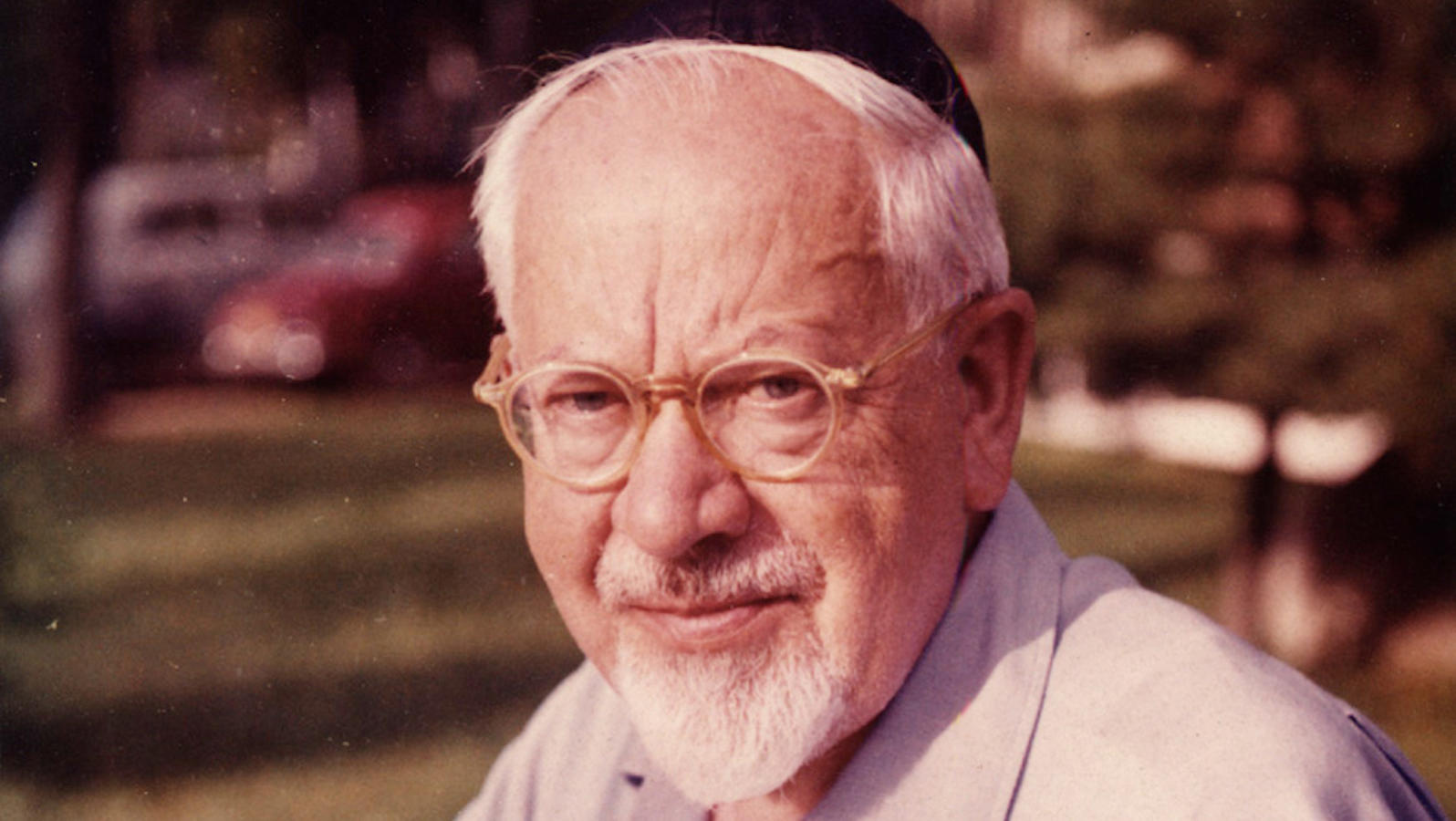
Rabbi Mordecai Kaplan- The Quintessential American Pragmatist Philosopher and Builder

 Notes from my Shabbat Discussion of August 28

This is a link to the discussion:

https://youtu.be/yaogz5sYnVk


The next Odd Couple- Both Professors at my Rabbinical School-yet polar opposites


Here we look at the development of new Jewish thought in the emerging Jewish America- exemplified by two religious scholars who came from the world of Orthodoxy to give Jewish tradition a voice in a secular world. Two very diametrically opposed approaches. Rabbis ( note that the other great figures I had discussed were not trained as Rabbis) who shaped America.


Rabbi Mordecai Kaplan


https://upload.wikimedia.org/wikipedia/commons/2/22/Mordecai_Kaplan.jpg


Personal- his grandson- Dr. Daniel Musher was chair of Education committee when I was asst Rabbi in Beth Yeshurun, TX. His father was co-founder of cosmetic company-Aveeno (because all products include avenanthramides, but he told me confidently, named after Avraham Avinu!) The grandson davened in the Orthodox chapel of the Conservative synagogue(much like our chapel)- an Orthodox service with the one exception of mixed seating. (He broke with the chapel service only when his daughter became Bat Mitzvah).

I had the opportunity of hearing Kaplan once give a guest lecture at my seminary- he was already in his 90’s. In very American style, he presented his arguments on the blackboard in a flow-chart diagram.

In Los Angeles, Kaplans most prominent expounder- Rabbi Harold Schulweis, who helped found the first Havurah based in a synagogue ( my congregation, Beth Shalom, Whittier).

Very creative- founder  and influencer of more important Jewish institutions than you can shake a stick at!

At the same time-Very controversial-even the Reform, at its most un Halakhic- did not elicit the fiery reaction:

One of my Orthodox friends told me he was looked upon with the Moslem declaration: varied: There is no God, and Mordecai is his prophet.


The Controversy:

Even his own Rabbinical school colleagues were not happy with his position. I will explain what it was further down.

Kaplan's central idea of understanding Judaism as a religious civilization was an easily accepted position within Conservative Judaism, but his naturalistic conception of God was not as acceptable. Even at the Conservative movement's Jewish Theological Seminary, as The Forward writes, "he was an outsider, and often privately considered leaving the institution.

In 1941, the faculty illustrated its distaste with Kaplan by penning a unanimous letter to the professor of homiletics, expressing complete disgust with Kaplan's The New Haggadah for the Passover seder.[God is mostly missing from it, flips the Haggadah on its head by emphasizing Moses, who is AWOL in the traditional text] Four years later, seminary professors Alexander MarxLouis Ginzberg and Saul Lieberman went public with their rebuke by writing a letter to the Hebrew newspaper Hadoar, lambasting Kaplan's prayer book and his entire career as a rabbi."[6 

I personally recall in Israel, at our branch in Jerusalem, one person was called up for an Aliyah who was reocnstructionst-used the phrase asher kervanu- and it caused an explosion with the resident professor.


But this reaction-takes the cake:

*******************************************

The Herem on Rabbi Kaplan:

As reported in HaPardes, 1945


June 12, 1945, McAlpin Hotel, NYC:

Excerpt, in translation:

Text  of the Decree of Excommunication 

My help comes from the Lord, the maker of heaven and earth

(Psalm 121:2)

The leaders of the people, rabbis of Greater New York and surroundings, heads of yeshivos, hasidic leaders, and scholars from the great yeshivos of this community, gathering together on the third day of the week of the parashah of Korah (Numbers 16:21), the second day of Rosh Hodesh Tammuz, 5705 – at the calling of the executive body of the Union of Orthodox Rabbis of the U.S. and Canada (Agudas HaRabonim) and of the Rabbinic Committee [Va-ad HaRabonim] of Greater New York, because of the terrible scandal done in a high-handed and openly insolent manner by a certain person called Dr. Mordecai Kaplan, in publishing a new monstrosity by the name of Siddur Tefihlos in which he demonstrated total heresy and a complete disbelief in the God of Israel and in the principles of the law of the Torah of Israel – and the future of a heresy that continues like this who can contemplate? – therefore, it has been decided unanimously and in one congregation to banish him and to excommunicate him and to separate him from the  community of Israel until he fully repents in accordance with law and custom.

We hereby publish and declare, by the authority of the King of the Universe and by the power of our holy Torah, with complete fortitude and strength and with the full weight of the law, A Total Prohibition and Total Ban on this Siddur, which must be neither seen nor found throughout all the territory of Israel, and by the bite of the snake [of excommunication], the curse of the rabbis that has no remedy is upon anyone who holds this siddur in his hand or who looks at it, whether in private or in public. Anyone who obeys all of the above will be doubly blessed.

https://kaplancenter.org/believing/the-excommunication-of-mordecai-kaplan/herem-text/


The siddur was then burned; Soon , the Rabbis gathered there tried denying responsibility for it, claiming that one Rabbi had gotten carried away. That was in response to the terrible outcry it caused in the rest of the Jewish community, that was still aware of the book burnings of the Nazis.( The only thing close in Jewish history that is recorded was the burning of the writings of Maimonides by Domincan Friars at the instigation of the Rambam's oponents.)


Image by Aharon N. Varady (transcription) and Mordecai KaplanJuly 28, 2021,  a link back to this source, Creative Commons Attribution-ShareAlike (CC BY-SA) 4.0 International copyleft license ]

[  

What was so scandalous?

Mordecai Kaplan- could be seen as the quintessential American philosopher- highlight-Pragmatic philosophy-Do what works, not what fits theory.

(1881-1983) Lithuania- his father, a Rabbi, came to US to serve under the first Chief Rabbi of New York, Jacob Joseph. Studied at Yeshiva and also at my Rabbinical school, which at the time straddled both Orthodox and Conservative, as well as doctorate in philosophy at Columbia. Ordained by Rabbi Reines, founding of Modern Religious Zionism (Mizrachi).

A builder by nature-straddling from Orthodox to non-

As Orthodox rabbi at Congregation Kehilath Jeshurun, a synagogue in New York( Still active, today, affiliated with modern Orthodox Ramaz)

 In 1912, he was an advisor to the creators of the Young Israel movement of Modern Orthodox Judaism, together with Rabbi Israel Friedlander.[3] Young Israel is not so young, but it certainly is wide-spread. Several branches here in LA. It used to be on the liberal side, with mixed social dancing, today, closer to the stricter Yeshiva Orthodox world. 

He was a leader in creating the Jewish community center concept. From his time on, almost every synagogue would be built with a basketball court!

Helped found the Society for the Advancement of Judaism, still active flagship synagogue of Reconstructionist movement. There, he held 1st Bat Mitzvah service ever for his daughter!

He would go on to establish the Reconstructionist Movement, even while retaining his identity in the Conservative movement- eventually, would lead to establishment, by his son in law, of Reconstructionist Rabbinical School . I was actually one of the first applicants, but did not follow through. The premise was fascinating- 1) all students would pursue a full PhD program in some area of Judaica at a major university. In parallel, they would pursue a full rabbinic academic course, premised on the idea of learning Judaism in its course of historic development- The first year, Biblical civilization, the second, the Rabbinic period, the third, the medieval period, and, in the final year, the modern period.) I thought it was too new to risk , and I found the philosophy-too cold. The movement has since then become much more New Age/ metaphysical mystical in orientation)

 The UJ- now AJU: He called for a university setting that could present Judaism as a deep culture and developing civilization a college to train Jews to live fully in American and Jewish culture as contributing citizens, a school to train Jewish educators, and a rabbinical seminary to train creative and visionary rabbis.  called for a university setting that could present Judaism as a deep culture and developing civilization. His proposal included programs on dramatic and fine arts to stimulate Jewish artistic creativity, a college to train Jews to live fully in American and Jewish culture as contributing citizens, a school to train Jewish educators, and a rabbinical seminary to train creative and visionary rabbis in 1947.David Lieber, the second president, was associated for many years with HTBE, where he led Bible study classes.

******************************************

 What burned up the Orthodox that they were ready to burn his prayer book?


Kaplan's naturalistic theology has been seen as a variant of John Dewey's philosophy: naturalism combined atheism with religious terminology in order to construct a religiously satisfying philosophy for those who had lost faith in traditional religion.( It would be wrong to say that Kaplan was an atheist- but, he was a material determinist, against “metaphysics” so that God could not be described in terms of “ spirit” separate form the world, but as “ the power that makes for salvation.”, Kaplan was also influenced by Émile Durkheim's argument that our experience of the sacred is a function of social solidarityMatthew Arnold and Hermann Cohen were among his other influences.


In agreement with prominent medieval Jewish thinkers including Maimonides, Kaplan affirmed that God is not personal, and that all anthropomorphic descriptions of God are, at best, imperfect metaphors. Kaplan's theology went beyond this to claim that God is the sum of all natural processes that allow man to become self-fulfilled:


“To believe in God means to accept life on the assumption that it harbors conditions in the outer world and drives in the human spirit which together impel man to transcend himself. To believe in God means to take for granted that it is man's destiny to rise above the brute and to eliminate all forms of violence and exploitation from human society. In brief, God is the Power in the cosmos that gives human life the direction that enables the human being to reflect the image of God.[7]


It is, one may say, theologically, having one’s cake ( God) and eating it to( turning God into a process of the material world).

Kaplan turned the Revelation of Sinai on its head. Tradition- There is first, the revelation and then the formation of a people, Israel. In Kaplan’s view” Judaism as a Civilization”, there is first and foremost, the people, and out of the people comes the revelation of the teachings of justice and ethical living.

On Halakha- he was a traditionalist in his behavior, but felt the Conservative too afraid to take major steps. Halakha- result of the people as source of authority, not Sinai, not the Rabbis- binding “ folkways”.

What is being “ reconstructed”?From My Jewish Learning: https://www.myjewishlearning.com/article/mordecai-kaplan-founder-of-reconstructionist-judaism/

The practical side of Kaplan’s position called for the re‑establishment of a network of all‑embracing, “organic” Jewish communities around the world that would ensure the self‑perpetuation of Jewish identity and fur­ther secular as well as religious components of the Jewish heritage (art, music, philanthropy, and so on). … leadership would be democratically elected, and private religious beliefs would not be infringed upon  (Kaplan is a strong advocate of cultural and religious pluralism, and he maintains that American Jews should partici­pate fully and creatively in both Jewish and American civilizations.) To clarify the international status of Jewry, Kaplan proposed a world‑wide Jewish assembly that would adopt a formal covenant defining the Jews as a transnational people, the hub of which was Zion and the spokes the branches of the diaspora. The religion of a group is manifested in “sancta,” spiritual symbols such as persons, places, events, and writings, which inspire feelings of reverence, commemorate what the group feels is most valuable, provide continuity through the flux of history, and for­tify the collective conscience of a people. Kaplan felt a deep attachment to Jewish sancta and Jewish religious literature.

[This is essentially the most Zionist of all the movements, as it is founded upon the concept of the Jews as a people, not a religion.]


However, in elevating Jewish peoplehood, he also eliminated Jewish choseness. Thus, the Torah blessing_ Asher bachar Banu-becomes

Asher kerevanu. Musaf is eliminated, since it is in essence a petition for return of the sacrificial worship.

(https://www.myjewishlearning.com/article/mordecai-kaplan-founder-of-reconstructionist-judaism/)

******************************


What did Kaplan suggest kept the center ( Conservaative) movement together?

Mordecai Kaplan's four areas of agreement (see Waxman, Tradition and Change, pp.214-215): 1)Eretz Yisrael, 2) The primacy of Religion, 3) The maximum plenitude of Jewish content, 4) The encouragement of scientific learning.( from my own course paper, later an essay in Jewish Spectator) http://www.rabbinorbert.com/2021/07/judaism-in-transition-1970.html


The Reconstructionist Movement

As a movement, it has not become major, but as an inspiration , it has been highly effective.

 Current distribution in USA: est. 38% are members of Reform synagogues, 33% Conservative, 22% Orthodox, 2% Reconstructionist, and 5% other types.( like New Age Judaism-Aleph).

The movement itself has moved back to a traditional perspective of theology:

Reconstructionist Judaism, the small religious movement famed for challenging many of Judaism’s most cherished precepts, has issued a new prayer book that defies some basic tenets of Reconstructionism itself.

Entitled “Kol Haneshama,” or voice of the soul, it is the movement’s first new prayer book in 44 years.

As its name hints, the prayer book abandons the classical Reconstructionist disdain for the spiritual and other-worldly. It is steeped in awe of Divine mysteries, including once-spurned miracles such as the parting of the Red Sea.

It even restores — albeit as an “alternative” reading — Judaism’s most defiant declaration of chosenness, the “Aleynu” prayer.


Quotes:

“The church maintained that having been founded by Christ, who was God incarnate, it alone, through its bishops, was the final and authoritative instrument of divine revelation. Allegiance to the church and obedience to its ordinances were the sole means to salvation. No salvation was therefore possible to anyone who remained outside the church — nulla salus extra ecclesiam. Likewise, Islam placed the main emphasis upon the Koran as the final revelation of God's will. Adherence to the teachings of the Koran, together with the recognition of Allah as God, and Mohammed as the greatest of prophets, constituted for the Moslems the sine qua non of salvation.

The Jews were not quite as emphatic as were the Christians and the Moslems in declaring the rest of mankind ineligible to salvation. Rabbinic teaching was inclined to concede that Gentiles, who were righteous or saintly, had a share in the world to come.”
― 
Mordecai Menahem Kaplan, Judaism as a Civilization: Toward a Reconstruction of American-Jewish Life

The chief opposition to the traditional conception of God in that sense arises not from the scientific approach to the study of nature in general, or even man in general. It arises from the objective study of history. The natural sciences like physics and chemistry cannot disprove the possibility of miracles, though they may assert their improbability. But the objective study of history has established the fact that the records of miracles are unreliable, and that the stories about them are merely the product of the popular imagination. The traditional conception of God is challenged by history, anthropology and psychology; these prove that beliefs similar to those found in the Bible about God arise among all peoples at a certain stage of mental and social development, and pass through a process of evolution which is entirely conditioned by the development of the other elements in their civilization.”
― 
Mordecai Menahem Kaplan, Judaism as a Civilization: Toward a Reconstruction of American-Jewish Life

(Page 485)
Creativity is the result of whole-souled and organic reaction to life’s values” of a reaction in which senses, emotions, imagination, and intelligence are fully aroused. It is not enough for a civilization to be rich in values of a religious or esthetic nature. Unless its people respond wholeheartedly to those values, the civilization is artificially sterile.

(Page 486)
The very significance of Judaism as a civilization would be lost, if artistic creativity in the expression of Jewish values were treated as something secondary to American Jewish life.


 “God is the Power that makes for salvation”

“God is the sum of the animating, organizing forces and relationships which are forever making a cosmos out of chaos.”

“We learn more about God when we say that love is divine than when we say God is love. A veritable transformation takes place. . . .Divinity becomes relevant to authentic experience and therefore takes on a definiteness which is accompanied by an awareness of authentic­ity.”

·  The only way to change the world is to change yourself into what you want others to be.

·   

·  Reconstructionism seeks to put gates through the fences that divide Jews into separate groups.

·   

·  A religion came to mean to me the sum of those habits and values, which give a people the will to live in common, to perpetuate itself and to make the best use of its collective life…[in short, the enduring definition of Reconstructionism, that we understand]… Judaism as an evolving religious civilization.

·   

·  Science does not destroy the belief in miracle. It merely transfers that belief from the supernatural to the natural.

·   

·  God is not the conception of the ordering principle in the universe, but of a power predisposing humans to their ultimate human good, provided each person does his/her share learning about and living up to the requisite conditions. To view the cosmos this way is to believe in God.

https://www.myjewishlearning.com/wp-content/uploads/2003/01/MMK-at-Camp-Modin-1596x900.jpg


https://archive.rrc.edu/resources/mordecai-m-kaplan


Monday, August 23, 2021

Buber and Rosenzweig- The Odd Couple Who Breathed New Life into Contemporary Jewish Thought


Our four great Jewish thinkers of the modern era-The unorthodox return to Orthodoxy without being Orthodox

My Discussion on Martin Buber and Franz Rosenzweig, August 14 and 21.


Discussion delivered on August 14:

Here is the link to the video on Martin Buber:

https://youtu.be/_tcOvjKWx2E

We now come in our discussions to thinkers who shaped our contemporary Jewish scene

I am dealing with them in pairs, that have opposites and a likes in tandem. Buber and Rosenzweig are Jews on the outside who come into the realm of Jewish thought. Kaplan and Heschel are Jews deeply immersed in the ancient Judaism who then seek to bring it to Jews who are on the outside. Jews on the Outside who come in from the cold.

Martin Buber


*I took graduate courses in psychology- noticed, in counselling texts, numerous reference to Martin Buber and Dialogue. *As a student in Rabbinical school,  it was popular to go about with pins in which was written the slogan: I-Thou ( Ich-Du).  *Buber was active with Zionism, and often spoke to my father’s youth group in Vienna ( together with Alfred Adler)

My father , a young member of the first chapter of Hashomer Hatzair in Vienna with Meir Yaari, founder of Israel’s Marxist-Zionist party, Mapam.

Notes from https://www.britannica.com/biography/Martin-Buber-German-religious-philosopher/From-mysticism-to-dialogue ( by Akiba Ernst Simon, one of my teachers and a member of the Frankfurt Lehrhaus

Martin Buber, (born February 8, 1878, Vienna—died June 13, 1965, Jerusalem), German-Jewish religious philosopher, biblical translator and interpreter, and master of German prose style. Buber’s philosophy was centred on the encounter, or dialogue, of man with other beings, particularly exemplified in the relation with other men but ultimately resting on and pointing to the relation with God. This thought reached its fullest dialogical expression in Ich und Du (1923; I and Thou).

From Vienna to Jerusalem

Buber was the son of …assimilated Jews… … brought up by his grandparents in Lemberg (now Lviv, Ukraine)[my mother’s home] The search after the lost mother became a strong motive for his dialogical thinking—his I–Thou philosophy.

Solomon Buber (1827–1906), the Lemberg grandfather, a wealthy philanthropist, dedicated his life to the critical edition of Midrashim, Mother also a “ maskil.” Not observant as a young man.

In his university days—he attended the universities of ViennaBerlin, Leipzig, and Zürich—Buber studied philosophy and art. ..The Nietzschean influence was reflected in Buber’s turn to Zionism and its call for a return to roots and a more wholesome culture.

… He was among the early protagonists of a Hebrew university in Jerusalem.

In 1916 Buber founded the influential monthly Der Jude (“The Jew”), which he edited until 1924 and which became the central forum for practically all German-reading Jewish intellectuals. Zionist-more closely cultural than political- Brit Shalom.

Buber took up the study of Ḥasidism. In Ḥasidism Buber saw a healing power for the malaise of Judaism and mankind in an age of alienation that had shaken three vital human relationships: those between man and God, man and man, and man and nature. They can be restored, he asserted, only by man’s again meeting the other person or being who stands over against him, on all three levels—the divine, human, and natural. Buber maintained that early Ḥasidism accomplished this encounter and that Zionism should follow its example.


[He was significant in opening the world of Hasidism to modern Jews, as well as Christians. The key criticism is that he “ cleaned up” the texts, reworded them to fit his theology, rather than present them as they were intended. He also himself avoided Hasidim. When he was a guest speaker at my Rabbinical school, one of my teachers asked him if he would like to attend a Hasidic shtiebel- he was absolutely uninterested]].

*******.

Buber’s manifold activities were inspired by his philosophy of encounter—of man’s meeting with other beings.

This basic view underlies Buber’s mature thinking; it was expressed with great philosophic and poetic power in his famous work Ich und Du (1923; I and Thou).

[FIRST-CLARIFICATION  -German, like French and other European languages has 2 forms for You-formal and informal ( or familial).Formal- Sie, Vous, Usted- as opposed to informal-Du, tu. Hebrew never had this distinction ( atah); English used to- hence, Thou as opposed to You. It is personal, intimate, as in Pennsylvania Dutch, not as in the “ Thou” used in later snob-speak]

Till today, his teachings are a very important part in what is called the third force in psychology: ‘humanistic psychology” (in  distinction from Freudian and behavioral): .

Core concept-self-actualization ( Carl Rogers , Abraham Maslow)  This is a link to  a very good description of his importance in the field of counselling: https://ct.counseling.org/2019/05/remembering-martin-buber-and-the-i-thou-in-counseling/

“Philosopher Martin Buber detailed the qualities that characterize a real “encounter,” or I–Thou meeting, between two people. His ideas remain as relevant today as when they helped to shape the humanistic movement in psychology and counseling.”


 A summary of his I-Thou:

According to this view, God, the great Thou, enables human I–Thou relations between man and other beings. Their measure of mutuality is related to the levels of being: it is almost nil on the inorganic and botanic levels, rare on the animal level, but always possible and sometimes actual between human beings. A true relationship with God, as experienced from the human side, must be an I–Thou relationship, in which God is truly met and addressed, not merely thought of and expressed.

Contrast with :I–It relationship, as in scholarly pursuits in which other beings are reduced to mere objects of thought or in social relations (e.g., boss and worker) wherein persons are treated largely as tools or conveniences.

Toward God, any type of I–It relationship should be avoided, be it theoretical by making him an object of dogmas, juridical by turning him into a legislator of fixed rules or prayers, or organizational by confining him to churches, mosques, or synagogues https://commons.wikimedia.org/wiki/File:Martin_Buber_1963c.jpg 

Very much a Rebbe, without Hasidim or Hasidism


An excerpts from his Tales of the Hasidim

·      

·         Sample Quotes:

·          

·         The true meaning of love one's neighbor is not that it is a command from God which we are to fulfill, but that through it and in it we meet God.

Martin Buber NeighborMeaning Of LoveCommand Martin Buber (2013). “On Judaism”, p.212, Schocken

·         All journeys have secret destinations of which the traveler is unaware.

Martin Buber InspirationalTravelFreedom Martin Buber (2015). “Hasidism and Modern Man”, p.47, Princeton University Press   

·         When two people relate to each other authentically and humanly, God is the electricity that surges between them.

Martin Buber LoveTwoPeople "Where is God in the Flood?" by Rabbi Avi Strausberg, www.huffingtonpost.com. October 17, 2017. 

·         The real struggle is not between East and West, or capitalism and communism, but between education and propaganda.

Martin Buber EducationRealStruggle "Encounter with Martin Buber". Book by Aubrey Hodes, 1972.

When people come to you for help, do not turn them off with pious words, saying, 'Have faith and take your troubles to God.' Act instead as though there were no God, as though there were only one person in the world who could help -- only yourself.

Martin Buber[based on a famous Hasidic saying on why God created atheism] PeopleWorldHave Faith

·         A human being becomes whole not in virtue of a relation to himself [only] but rather in virtue of an authentic relation to another human being(s).

Martin Buber VirtueRelationHumans

·         I do not accept any absolute formulas for living. No preconceived code can see ahead to everything that can happen in a man's life. As we live, we grow and our beliefs change. They must change. So I think we should live with this constant discovery. We should be open to this adventure in heightened awareness of living. We should stake our whole existence on our willingness to explore and experience.

Martin Buber KnowledgeLearningAdventure "Martin Buber: An Intimate Portrait". Book by Aubrey Hodes, 1971.


·         In spite of all similarities, every living situation has, like a newborn child, a new face, that has never been before and will never come again. It demands of you a reaction that cannot be prepared beforehand. It demands nothing of what is past. It demands presence, responsibility; it demands you.

Martin Buber

https://www.azquotes.com/author/2101-Martin_Buber


This is a great audio-visual explanation of Buber’s I Thou, and you can see how well it transfers to modern humanistic psychology. The sound went dead on this video clip during the recording so click on the link here:

https://youtu.be/16Cr82mLhkw

Buber in 10 minutes:by Eric Dodson.Prof Psych University of West Georgia.


**********************************************************************************************

The second of my “ Pairs” in Jews on the Outside who came in from the Cold

Shabbat August 24

Link to the discussion video 

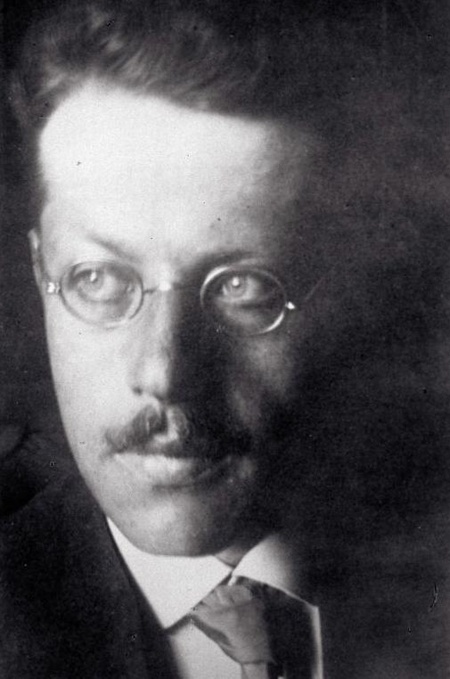
Franz Rosenzweig

First published Fri Feb 27, 2009; substantive revision Mon Jan 28, 2019

Franz Rosenzweig (Stanford Encyclopedia of Philosophy)

https://upload.wikimedia.org/wikipedia/commons/9/99/Franz_Rosenzweig.jpg


Franz Rosenzweig (1886–1929) ranks as one of the most original Jewish thinkers of the modern period.

. ...“total renewal of thinking” through a novel synthesis of philosophy and theology he named the “new thinking.”

 Rosenzweig’s account of revelation as a call from the Absolute other helped shape the course of early 20th-century Jewish and Christian theology. ...a lasting impact on 20th-century existentialism; ... dialogue presented the interpersonal relation between “I” and “You” as both constitutive of selfhood and as yielding redemptive communal consequences. (See Buber)... ... the German translation of the Bible in which he collaborated with Martin Buber. He founded a center for Jewish adult education in Frankfurt—the Lehrhaus

Key points:

From a very assimilated background... a near-conversion to Christianity, an inspired return to Judaism

the composition of the beginning of his magnum opus on military postcards sent home from the Balkan front,

 the abandonment of a promising academic career in order to live and teach in the Frankfurt Jewish community,

and his heroic efforts to continue his thinking, writing, and communal work after succumbing to the paralysis brought on by ALS.

...  the greatest work of modern Jewish philosophy: The Star of Redemption. The Star is a system of philosophy that seeks to give a comprehensive and ramified account of “All” that is, and of the human being’s place within that “All”.


***** His conversion almost to Christianity and back to Judaism:

 July 7, 1913, Rosenzweig engaged in an all-night discussion with Rosenstock and his (Rosenzweig’s) cousin Rudolf Ehrenberg ( baptized at age 11) …he later claimed to have spent the hours after the conversation alone in his room, pistol at hand, “face to face with the Nothing.” He emerged from the experience determined to convert to Christianity in order thereby to take up his place in the historical realization of redemption in the world.

[And then]

******

Franz Rosenzweig (jewishvirtuallibrary.org)

. Rosenzweig wrote to his own parents: "We are Christians in all things, we live in a Christian state, go to Christian schools, read Christian books, our whole culture is based on a Christian foundation." … Rosenzweig promised to get baptized. … one condition. He was, he said, not a goy, but a Jew, and wanted to take a closer look at the things from which he would be separated by this conversion. He asked his relatives for a time of contemplation and reviewing, a time of a last (or was it the first?) conscious participation in the "Ten High Holy Days from Rosh HaShanah to Yom Kippur. For him these became the "ten days of return" to his roots in Judaism…

 He expressed his resolve to reject conversion saying: "We agree …no-one comes to the Father but through him (Jn 14:6). No one comes to the Father - but it is different when somebody does not have to come to the Father because he is already with him. And this is so for the people of Israel …”


[What happened? He walked into a small Orthodox synagogue and came out converted. Note- not a liberal synagogue with organ, choir, the service more in German than Hebrew. It must have been incomprehensible for him. Yet it shook him.

His progress-deepening his Jewish study and exploring Jewish observance ( not totally Orthodox- example- on Tefillin- “ Not Yet”.]

(Stanford)

In 1914, already under [Herman] Cohen’s influence and unmoved by the romantic theology of Martin Buber popular at the time,[ his collaborator] Rosenzweig wrote his first essay in Jewish theology, “Atheistic Theology.” …only by taking the transcendence and at once the revelation of God seriously—rather than reducing the divine to an expression of a Jewish life force—can we grasp the split the human being experiences in history, between his personal self-realization and the realization of the world. It is the notion of revelation, Rosenzweig suggests, that allows us to view history along an absolute redemptive trajectory, established by God’s relation to the human being in the world. Such a notion of revelation would reappear at the center of Rosenzweig’s systematic work, The Star of Redemption, a few years later.

[Note-he is writing his thoughts on post-cards that he sends home form the battlefront of WWI]

His critique of Buber-they became good friends-( from Simon)

After the religious philosopher Franz Rosenzweig, Buber’s friend and fellow translator of the Bible, read Ich und Du, he remarked: “Buber gives more recognition to the ‘Thou’ than anybody before him, but he wrongs the ‘It’.” … While Rosenzweig tried to live it as much as possible and became more and more a practicing Jew, Buber stood his ground as one who embodied his Judaism in no prescribed, special manner.

**********************************************************


His contribution to world philosophy: The New Thinking:

The old classical philosophy has come to a dead-end

Abstracting from time. In their quest to grasp what is universally and essentially true, philosophers abstract from the temporal, relational context in which human beings experience the world around them. (Essence vs existence).

Reductive reasoning. The attempt to grasp what things are essentially inclines the old thinking to reason out a single ground for all beings, thereby reducing particular beings to something other than what they are. [reductionist fallacy]

Thinking from the Absolute standpoint. The quest for the most comprehensive answer to the “what is” question of the philosophical tradition leads the old thinking, in its German Idealist manifestation, to aspire to an “Absolute” standpoint from which the whole of what is—the “All”—can be grasped in its unity

 Rosenzweig proposes a “new thinking” that pursues knowledge of God, world, and the self in their interrelationsfrom out of the individual standpoint of the human being in time.

 For the new thinking suggests that one does not attain truth by stepping out of the river of time, but rather that truth is that which “unfolds in time.”

[roots of what becomes known as “existentialism.” Philosophers constantly sought the “ ‘essence’ of an object or person. Nomenon behind phenomenon. Modern philosophy rejected “essence” ( the metaphysical) but could address only the physical. In Existentialism, what counted was “ Existence”]


The Freie Jüdische Lehrhaus

https://www.tabletmag.com/sections/community/articles/frankfurt-lehrhaus-a-century-later

(Joshua Krug)

The Freies Jüdische Lehrhaus, or Free Jewish House of Learning… an educational institution, and a practical model, meant to speak to Western Jews who were strangers, not “natives,” to Judaism. This Lehrhaus, or house of learning, a revamped beit midrash tailored to assimilated Jews, met in community buildings and rented halls. It lacked modern precedent. The educational experiment riffed on ideas emerging in Weimar Germany concerning adult education, as it synthesized critical academic study of Judaism with Talmud Torah (Torah study), toward a revitalized practice of adult Jewish teaching and learning. Here, Jews ignorant of, and alienated from, Jewish life and tradition acquired knowledge and understanding of Judaism and explored Jewish identity, on their own terms.


… in 1920, “a learning that no longer starts from the Torah and leads into life, but the other way round: from life, from a world that knows nothing of the Law, or pretends to know nothing, back to the Torah. That is the sign of the time.

Rosenzweig’s principle of “learning in reverse order” resulted in counterintuitive hiring practices. Largely assimilated, Jewish and Jew-ish characters from the German intellectual and cultural scene, often with limited Jewish knowledge, taught Judaism-related subjects.. [This was equivalent of the blind leading the blind as a new movement in education].

https://upload.wikimedia.org/wikipedia/commons/3/3e/TheStarOfRedemptionEng.svgunity-

[ lecturers: doctor Richard Koch , the chemist Eduard Strauss , and the feminist Bertha Pappenheim and Siegfried Kracauer , a popular culture critic for the Frankfurter Zeitung . Among those who would later become famous were SY Agnon , who received the Nobel Prize in Literature, andvGershom Scholem , the founder of modern studies on Kabbalah . The expressionist writer Alfons Paquet , 1000 members in a community of 30,000-LA Limmud was happy to have 500 in a community of 500,000! I have to add that the Frankfurt Jewish community alone raised more charity to help the survivors of the Kishinev pogrom of 1904 than all of Americas Jewish community.!  This included some of the theoreticians of critical theory, which upended classical Marxist thought to add multiple factors besides economics that sit on us- ( some were in my father’s community-Adorno-Horkheimer- . Made famous by Hebert Marcuse, who was seen as an inspiration for the SDS in my day- except he repudiated the hippies and yippies. It has since been perverted into the current form of Critical Race Theory)]

It only lasted a few years, as Rosenzweig succumbed to ALS ( Lou Gehrig’s Disease). However, it was later reopened under Martin Buber and replicated throughout Germany- it was reincarnated in US as the Havurah movement and such mass education programs as Limmud.

It is still an educationally astounding format, even if it means I would have no business. It forces the leader to confront the core texts of Judaism and grapple with them.]


Buber Rosenzweig Translation

Translations are revolutionary: William Tyndale-Martin Luther-Moses Mendelsohn

…the unfamiliar, authentic quality of the original Biblical text, Rosenzweig and Buber made an effort to imitate certain characteristics of the original …to reproduce the cadence of the original Biblical text, and to imitate what they understood to be its “spoken” quality, by dividing any given section they were translating into “breath-units.”

Example, from Deut Haazinu

: כִּשְׂעִירִם עֲלֵי דֶשֶׁא
וְכִרְבִיבִים עֲלֵי עֵשֶׂב.

Robert Alter translation.)

 like showers on the green
and like cloudbursts on the grass.
[12](

Buber-Rosenzweig

wie Nebelrieseln übers Gesproß   Like foggy droplets on grass sprouts,
wie Streifschauer übers Gekräut   Like patchy showers on lawn.

Courtesy https://www.thetorah.com/article/die-schrift-a-non-territorial-translation-of-the-land


Der Stern der Erlösung The Star of Redemption

https://scontent.ftlv5-1.fna.fbcdn.net/v/t1.18169-9/s720x720/20430159_10154905996967894_1212999727500839550_n.jpg?_nc_cat=100&ccb=1-3&_nc_sid=cdbe9c&_nc_ohc=DoZ8nVJ03HoAX_NCjm5&_nc_ht=scontent.ftlv5-1.fna&oh=edd40e510e6dedcd7da48a2eff63184b&oe=61250A14


The Magen David as a visual diagram of the key elements of Jewish Thought-For the first time we have a symbol with content: As the cross represents individual salvation for the Christian, so the Star now represents redemption for the world.

https://commons.wikimedia.org/wiki/File:TheStarOfRedemptionEng.svg


We see the intertwined triangles. On one triangle are the three key elements of that which is: God-the Universe-The Human Being. All three are completely disparate elements. How can they interact? That is the second triangle. God relates to the universe through the act of creation;
 relates to them human being through the revelation of his presence; the Human being relates to the world through the act of redemption.

 The Star of Redemption does not lead us out of this world beyond reality. Rather it concludes with the stepping out into the world with the task of proving the truth in the world. "About death …", are the first words of the book. Rosenzweig starts out with a reality that is experienced very personally. "Into life …", are his last words. The truth of revelation leads into the reality of life when it is proved [bewährt]. After completing The Star of Redemption Rosenzweig felt that he now had to personally face up to proving the truth and not avoid reality by continuing to write books any longer. https://www.jewishvirtuallibrary.org/franz-rosenzweig

Quotes:

Nothing Jewish is alien to me ( a play on Roman writer; Love brings to life whatever is dead around us. "Homo sum, humani nihil a me alienum puto", or "I am human, and I think nothing human is alien to me. Nichts Judisches ist mir fremd.)


“All future events are merely a reproduction of the first moment of Love, giving birth to itself from an inner womb that continuously fertilizes itself. Love carries in itself its everlasting renewed beginning.”
“There is no act of love toward one’s neighbor that falls into the void. Just because the act was realized blindly, it must appear somewhere as effect. Somewhere,”
― 
Franz Rosenzweig, The Star of Redemption

https://www.goodreads.com/author/quotes/192604.Franz_Rosenzweig

"[2Franz Rosenzweig

·         The knowledge of everything knowable is not yet wisdom

Franz Rosenzweig, Nahum Norbert Glatzer (1955). “On Jewish Learning”, p.86, Univ of Wisconsin Press

 To have found God is not an end but in itself a beginning.

https://www.azquotes.com/author/43434-Franz_Rosenzweig

·         Philosophy takes it upon itself to throw off the fear of things earthly, to rob death of its poisonous sting.

o    The Star of Redemption (1921), p. 3.

·         Cognition is autonomous; it refuses to have any answers foisted on it from the outside. Yet it suffers without protest having certain questions prescribed to it from the outside (and it is here that my heresy regarding the unwritten law of the university originates). Not every question seems to me worth asking. Scientific curiosity and omnivorous aesthetic appetite mean equally little to me today, though I was once under the spell of both, particularly the latter. Now I only inquire when I find myself inquired of. Inquired of, that is, by men rather than by scholars. There is a man in each scholar, a man who inquires and stands in need of answers. I am anxious to answer the scholar qua man but not the representative of a certain discipline, that insatiable, ever inquisitive phantom which like a vampire drains whom it possesses of his humanity.

o    in Franz Rosenzweig: His Life and Thought (1961/1998), p. 9

https://en.wikiquote.org/wiki/Franz_Rosenzweig

-Dealing with ALS and Death

Rosenzweig suffered from the muscular degenerative disease Amyotrophic lateral sclerosis (also known as Lou Gehrig's disease). Towards the end of his life, he had to write with the help of his wife, Edith, who would recite letters of the alphabet until he indicated for her to stop, continuing until she could guess the word or phrase he intended (or, at other times, Rosenzweig would point to the letter on the plate of his typewriter). They also developed a communication system based on him blinking his eyes.

Rosenzweig's final attempt to communicate his thought, via the laborious typewriter-alphabet method, consisted in the partial sentence: "And now it comes, the point of all points, which the Lord has truly revealed to me in my sleep, the point of all points for which there—". The writing was interrupted by his doctor, with whom he had a short discussion using the same method. When the doctor left, Rosenzweig did not wish to continue with the writing, and he died on the night of 10 December 1929, in Frankfurt, the sentence left unfinished.[9]

Rosenzweig was buried on 12 December 1929. There was no eulogy; Buber read Psalm 73 The quote is on his monument.[10]


https://upload.wikimedia.org/wikipedia/commons/e/e3/FFM_Franz-Rosenzweig-Gedenktafel.jpg


 Monument to Franz Rosenzweig on the wall to his house:

He was the trail-blazer of the Jewish-Christian dialogue

Companion of Martin Buber

Master of the translation into German of the Bible

Founder of the Free Jewish Academy in Frankfurt AM

Quote: Thus I am always with you( Ps  73:23)


This is an audio-visual rendition of the thought of Rosenzweig, as described by faculty of the Catholic University of Portugal .As Catholics, they have a very good understanding of the philosophy of the Jewish Rosenzweig.

 This is the direct link to the video on Rosenzweig.

https://www.youtube.com/watch?v=Q0C3QxVkWB8&list=PLxjc3h0xSwvPFbOEiqM-UovkVt65l-B4N&index=9&t=85s